
Opinion
Theft by Proxy — When AI Becomes an Intermediary for Copying
A record of a product that began in 2019, whose functionality was later rebuilt with AI and offered as an alternative — and the legal, ethical, and Sharia questions that raises.

In 2019, I began building a product that helps university students plan their class schedules. About five years later, the owner of a large Telegram channel used AI to recreate the product's functionality, hosted a working copy, and offered it to the same audience through an alternative link.
I call this theft by proxy: placing AI between the actor and the existing work so the output appears separate from its source, even though the tool started from a known product and a defined set of features.
From QUStudio to Pocket
The project began as QUStudio, a Chrome and Firefox extension that imported a Qassim University student's courses and let them choose sections, build a schedule, and check for conflicts. I announced its first release on June 27, 2019 (Opens in a new tab).
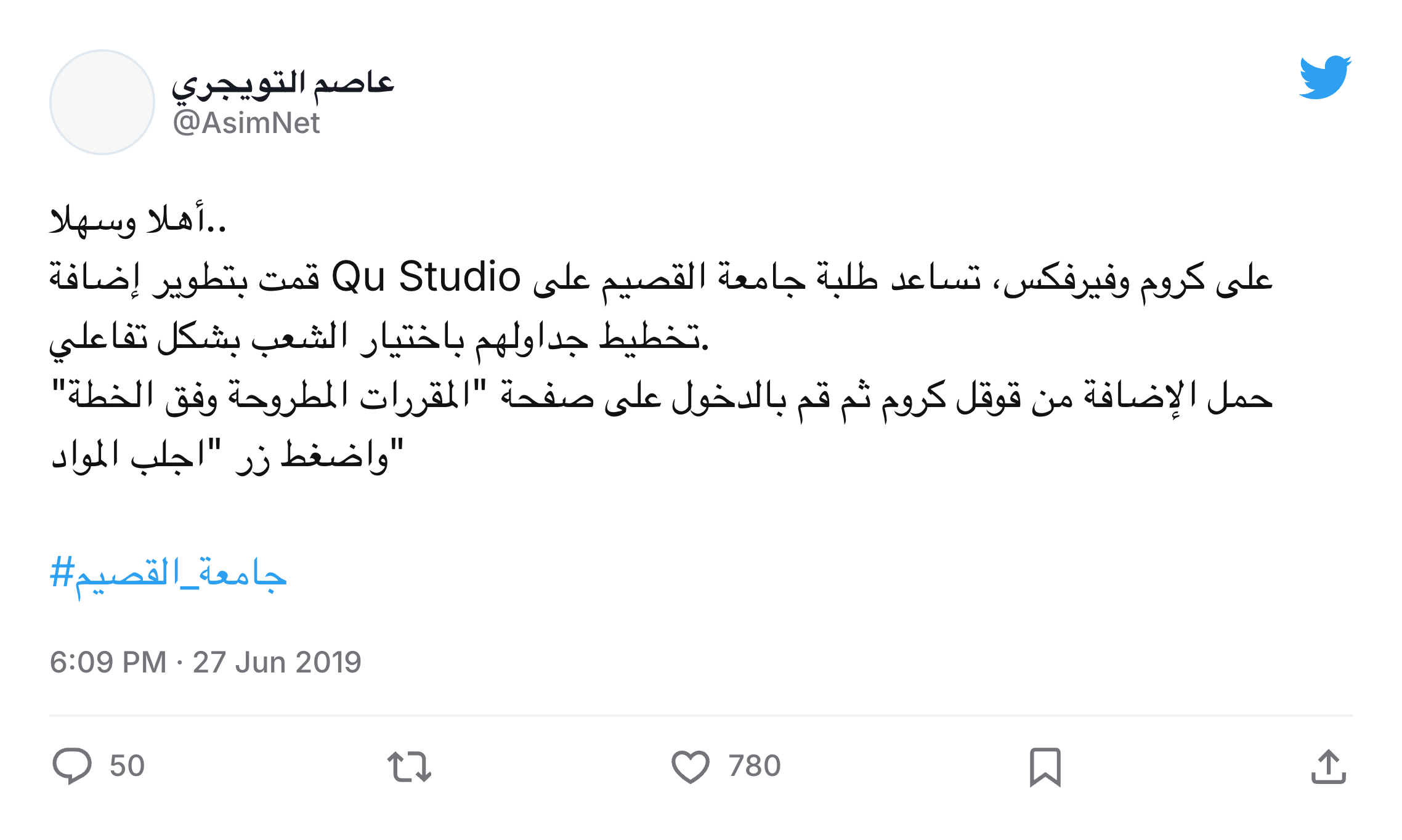
This is how the extension worked in the browser:
The project later became a bookmarklet that ran from the university system page. I then rebuilt it as Pocket, a native iPad app. Across its different forms, the product was used by more than 30,000 students, and over 1,000 users paid for its services.
Five years of knowing the product
The channel owner did not arrive at the idea from scratch. For about five years, he listed QUStudio among his channel's quick options and directed students to it. He knew the product, its functionality, and its audience before building his own solution.
He later used AI to recreate those features and hosted a free, working version called Qu Schedule. He gave it an alternative link and promoted it in the channel and its associated group, which has around 60,000 members.
After Qu Schedule launched, questions about QUStudio in the group were redirected to the new version and its link.
If you ordered a robot to steal
Imagine asking a robot to steal something and watching it carry out the order. Who is responsible: the company that made the robot, the company operating the AI model, or the person who issued the command?
The answer depends on where the act originated. If a manufacturing or programming defect caused it, responsibility may extend to the manufacturer or programmer. But if the machine carried out an intentional instruction as requested, it does not become the decision-maker; it remains a tool in the hands of the person directing it.
A paper on criminal liability for autonomous-vehicle accidents in Saudi Arabia (Opens in a new tab) concluded that an autonomous vehicle is not an independent legal person. Liability remains connected to human action and is assigned according to the source of the fault among the owner, driver, manufacturer, and programmer.
In amendments to the Traffic Law's implementing regulations published by Umm Al-Qura on June 12, 2026 (Opens in a new tab), traffic rules and obligations were assigned to the vehicle owner when an autonomous vehicle operates without human intervention.
This does not apply traffic law to AI models. It illustrates the principle: the absence of a human hand during execution does not mean there is no human responsible for operating and directing the tool. The model did not choose Pocket, decide which features to build, host Qu Schedule, or promote it. Those were human decisions.
Why protect the work of innovators?
It was once easy to tell someone who wanted to imitate a product: copy it if you can. Copying itself demanded time and expertise, and the result often fell short of the original because the imitator did not possess the accumulated experiments and decisions behind it. Reproducing the outcome was therefore not necessarily a shortcut, but another undertaking with its own costs and risks.
AI has sharply reduced that cost and can now recreate much of an existing product's functionality in very little time. This changes the incentive: if the least expensive path is to wait for a product to succeed and then imitate it in days, why should a developer bear years of experimentation and risk to build the first one? Does the old confidence in the difficulty of imitation still make sense when its tools have changed?
This helps explain one reason for protecting the work of innovators. Intellectual-property systems grant creators limited exclusive rights, not as permanent ownership of an idea, but to give them an opportunity to benefit from what they built before the defined economic rights expire.
There is a difference between a patent and copyright:
- A patent (Opens in a new tab) lets an inventor prevent others from making, using, or selling the invention without permission. Protection typically lasts 20 years from the filing date.
- Saudi Arabia's Copyright Protection Law (Opens in a new tab) protects computer software, whose economic protection lasts 50 years from its first public display or publication.
I am not claiming that Pocket is patented, nor that every similarity between two products is an infringement. The general idea of building class schedules belongs to no one, and the Copyright Protection Law itself excludes ideas, procedures, and methods of operation. The harder question is when an output is an independent solution to the same idea — and when it is a recreation of an existing product and the details of its functionality.
Those boundaries matter because protection is not only a reward for past work. It keeps building something new a rational choice instead of making waiting and imitation the more economical decision.
Legally, ethically, and under Sharia
Legally, the situation requires a technical comparison of what was reproduced: a general idea, or protected code, design, or expression. Different code does not answer the question by itself, and similar functionality does not settle it either.
Ethically, the question remains even if no legal infringement is established: is it acceptable to promote a product for five years, rebuild its functionality with AI, and offer your version to its audience through an alternative link? Does making the copy free change the nature of the act?
Under Sharia, the International Islamic Fiqh Academy's resolution on moral rights (Opens in a new tab) states that authorship, invention, and innovation rights are protected and may not be infringed. Its resolution on AI (Opens in a new tab) also requires legitimate purpose, use, and outcome; the protection of rights; and honesty, documentation, and transparency. Applying those principles to this particular case is a question for specialists, not a fatwa I am issuing here.
Pocket today
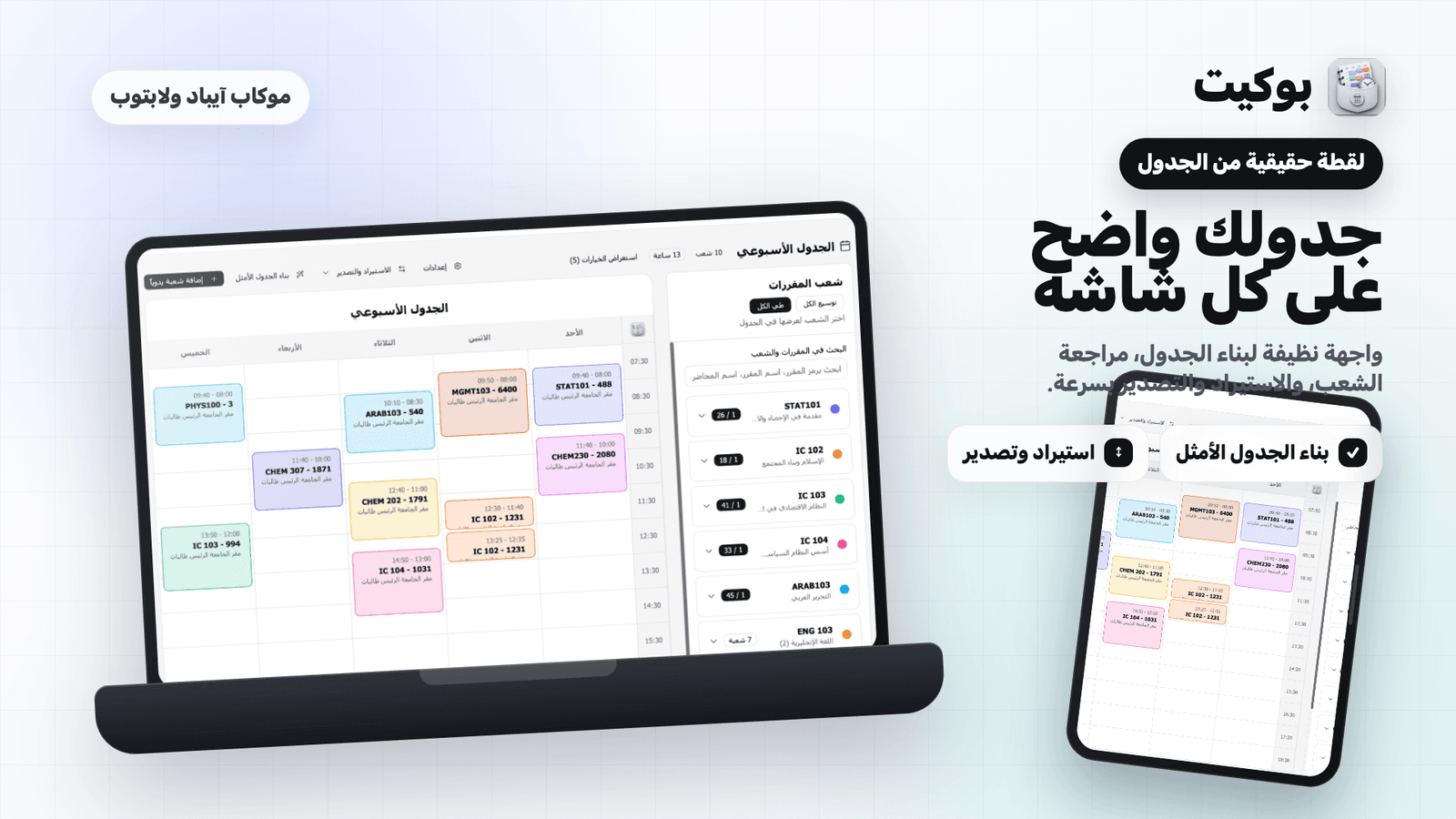
Pocket is now available as an iPad app supporting Qassim University and Imam Muhammad ibn Saud Islamic University. I explain the current version in a separate post: Pocket's new form and what it offers students at both universities.
What do you think?
Where does the right to compete end and the copying of an existing product begin? Does AI change the judgment, or only the means of execution? How would you assess what happened legally, ethically, and under Sharia?
Leave your view in the comments, whether you agree with the term "theft by proxy" or not. I especially welcome perspectives from specialists in law, Islamic jurisprudence, and software.
Though I am the latest of my age,
I shall bring what those before me could not.
Comments
Comments are reviewed before they appear.
New writing, in your inbox
New posts and notes when they’re written. Nothing else.
Your address is never shared, and you can unsubscribe in one click.
Related posts
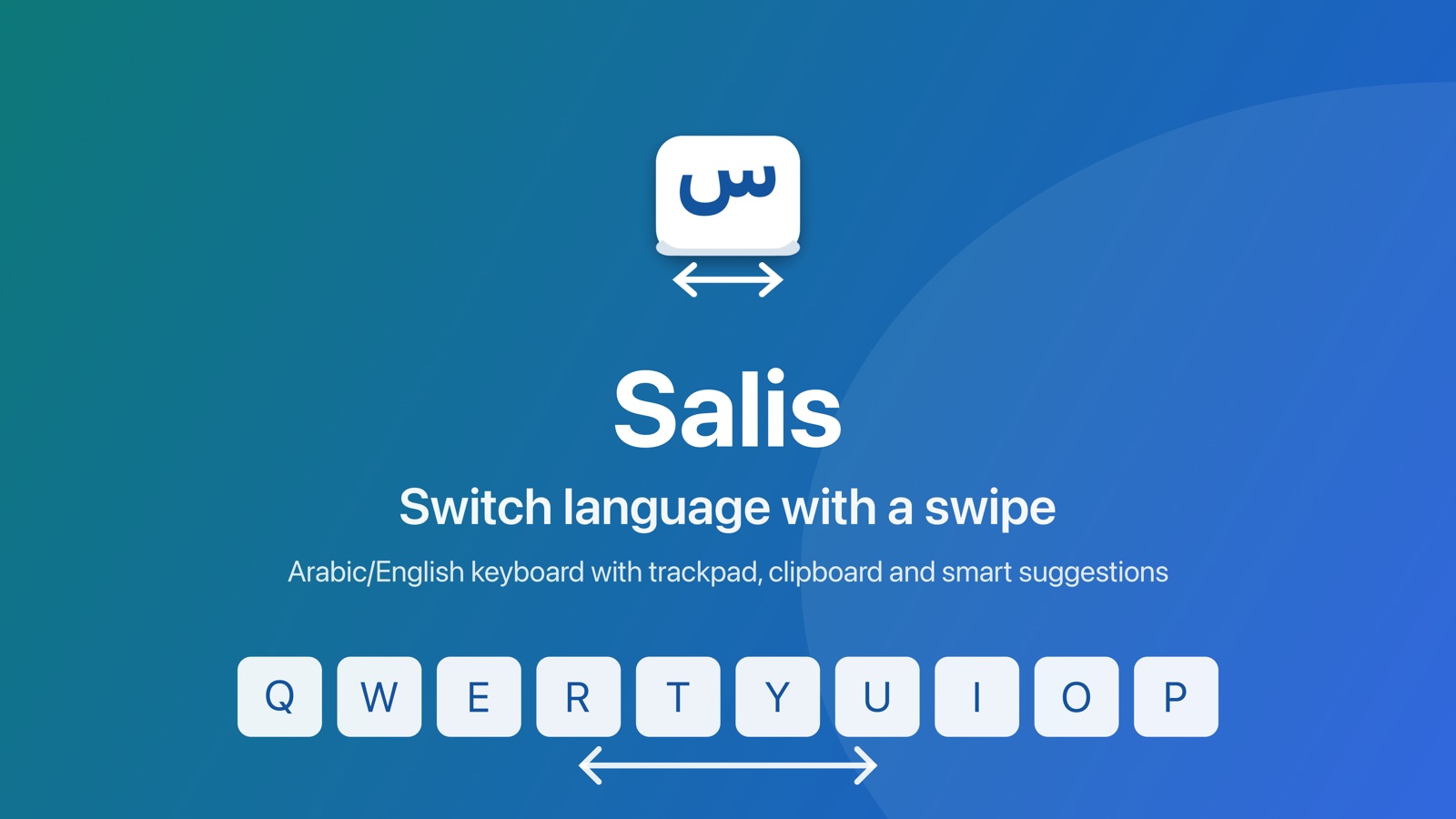
Salis; a keyboard that gets me
A tool you use hundreds of times a day can't afford to let you down. When my favorite keyboard did, and the alternative didn't understand me, I built one that does.
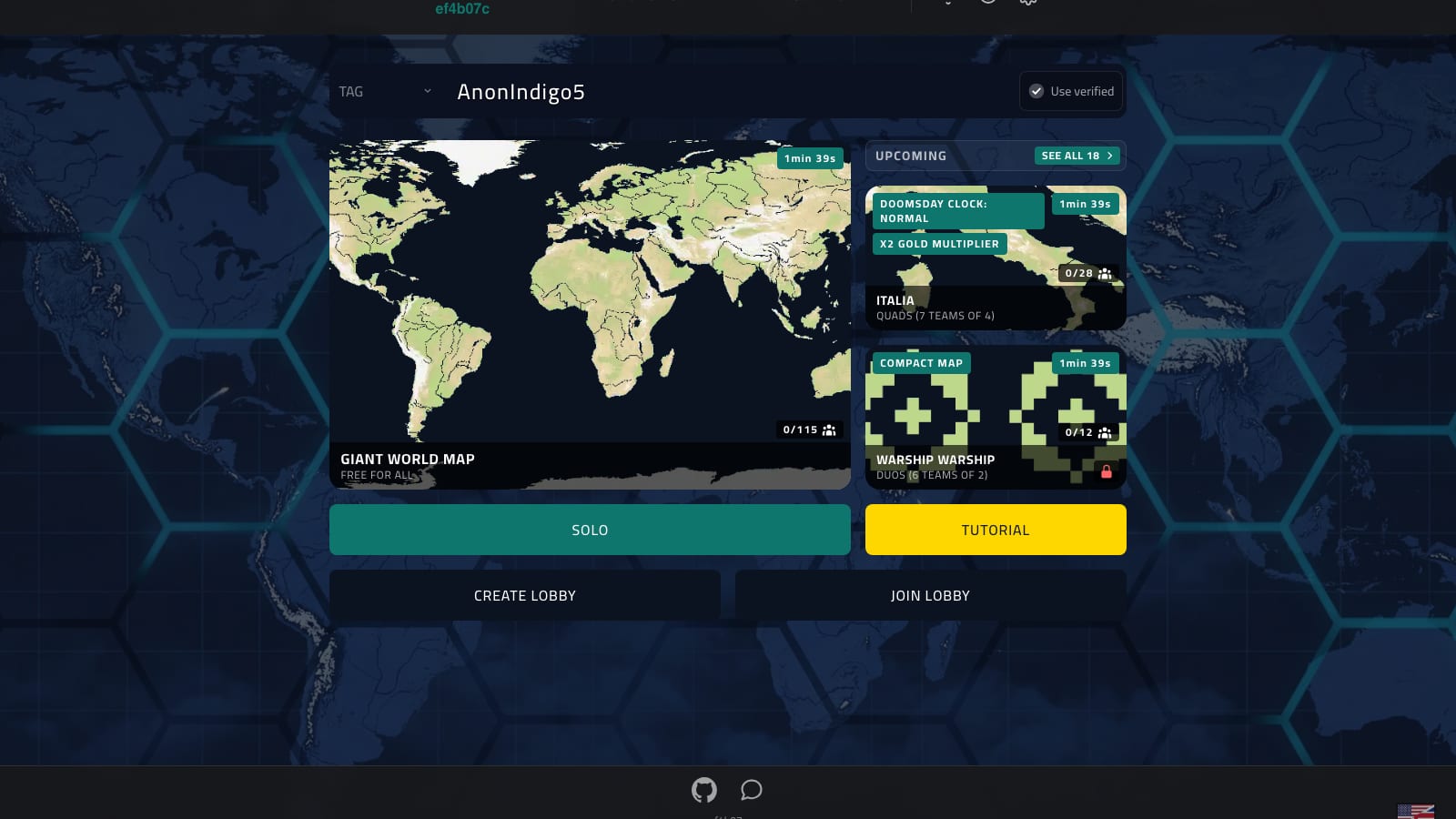
Siyada — a 2013 note I found already built, in an open-source game
An idea that sat in my notes for twelve years, then turned up finished in an open-source game. My part was to make it speak Arabic.
Pocket Is on iPad — and Now Supports Qassim and Imam University
One app that turns the offered-courses page into a clean, conflict-free weekly schedule — now for two universities.