
Projects
Siyada — a 2013 note I found already built, in an open-source game
I love strategy games, and since 2013 my notes have held an idea for a game on a world map you conquer. I found it in OpenFront, exactly as imagined and better. It just wasn't Arabic, so I prepared a minimal Arabic edition and shipped it.
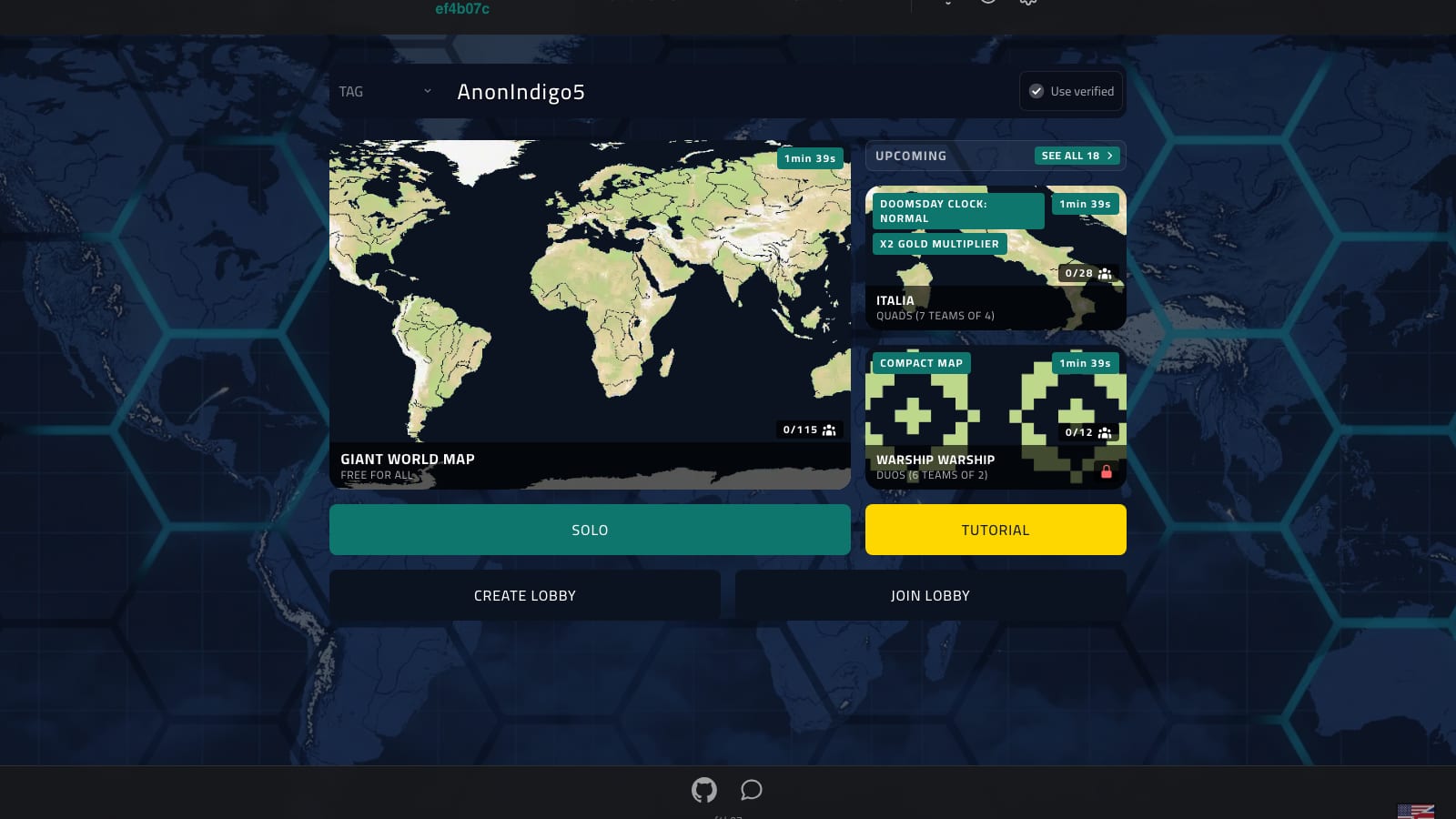
I love strategy games. Not the fast fighting in them, but the quiet part: starting with a small patch of land, thinking about whom to ally with and whom to leave alone, when to expand and when to wait.
My notes app has an old entry dated 2013: "A game idea: the whole world map is the board. You start in one corner and don't stop until you own it." The note never became a project. Every year or two it resurfaced, I opened it, smiled, and closed it again.
Found it
A while ago I stumbled on OpenFront (Opens in a new tab): a real-time strategy game in the browser, open source, where you start with a small territory on a real-world map, grow it with troops and gold, forge or betray alliances, and try to hold the map.
It was exactly what I had imagined in 2013. Better, in fact, because its team built what I would never have built alone: a multiplayer engine that carries dozens of players per match, a long list of maps, and a living community that ships changes every week.
One thing was missing for me: it wasn't properly Arabic. A partial translation, an interface that read from the left, and nation names on the map that could not even be drawn in Arabic script.
So I prepared it
Because the game is open source under AGPL, I needed nobody's permission; I only needed to respect the license and make it speak Arabic. I prepared an edition I called Siyada (سيادة, "sovereignty"), with the minimum that makes it look and feel Arabic:
- Full localization of the interface, events, tooltips and tutorial, map and nation names, and Arabic names for the AI players.
- Right-to-left on every screen, while the battlefield itself stays as it is.
- Nation names drawn on the map in connected Arabic letters, which turned out to be the hardest technical piece.
- No accounts, store, ads or tracking. Pick a nickname and play.
- Our own server, which sends not a single request to the original game's servers.
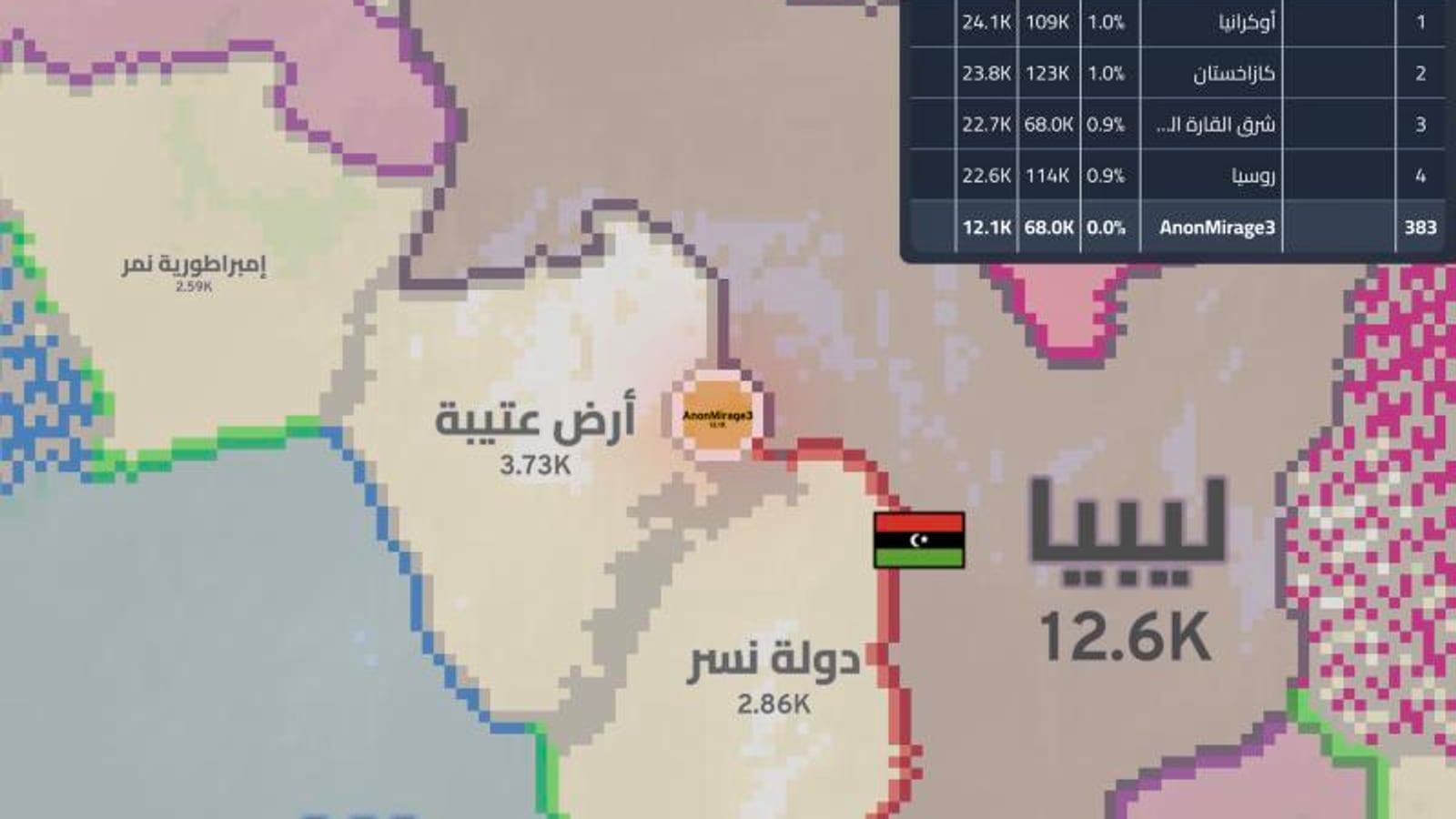
Then I shipped it. It is not finished, it is in open beta, and its code will be published once I am confident it is clean, in line with the AGPL network-service clause.
Try it
Open siyada.schemava.dev (Opens in a new tab), pick a name, and start a solo match against AI nations, or create a lobby and send the link to friends. The technical details are on the project page.
A small irony: the first multiplayer match I played with a friend revealed that maps loaded painfully slowly through the tunnel, and he could not get in. Fixing that took two hours, and it was the first "production lesson" of a game that began as a line in a notebook.
The note that waited twelve years was not, in the end, built by me from scratch. Someone else found it and built it better than I would have, and my share was to open its door to Arabic speakers. That seems to me better than staying a line in my notes.
Comments
Comments are reviewed before they appear.
New writing, in your inbox
New posts and notes when they’re written. Nothing else.
Your address is never shared, and you can unsubscribe in one click.
Related posts
Salis; a keyboard that gets me
A tool you use hundreds of times a day can't afford to let you down. When my favorite keyboard did, and the alternative didn't understand me, I built one that does.
Pocket Is on iPad — and Now Supports Qassim and Imam University
One app that turns the offered-courses page into a clean, conflict-free weekly schedule — now for two universities.

Theft by Proxy — When AI Becomes an Intermediary for Copying
When AI is used to rebuild an existing product, who bears responsibility — and where does competition end and copying begin?